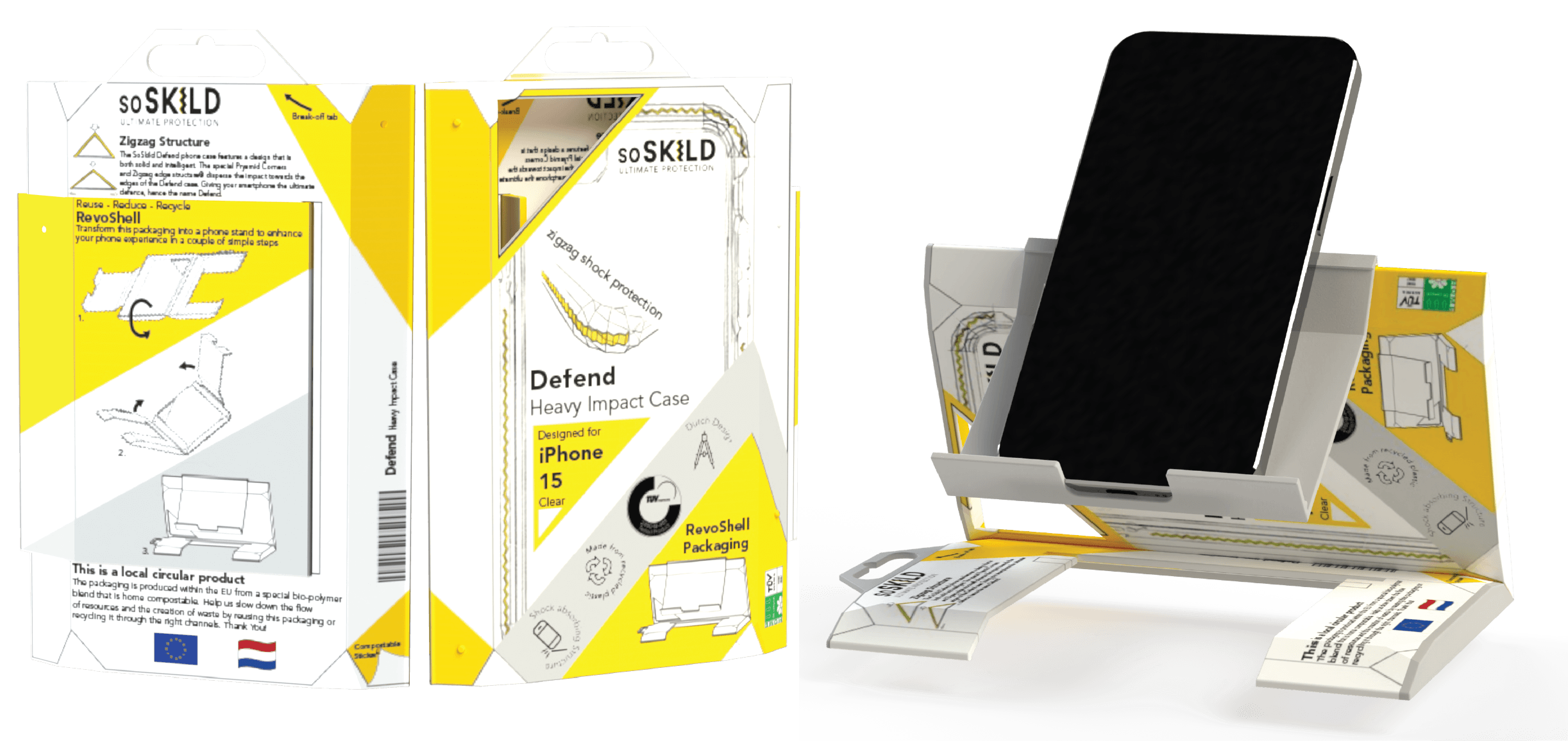
IDE Project 5: Reusable Phone Case Packaging
What is the future of packaging?
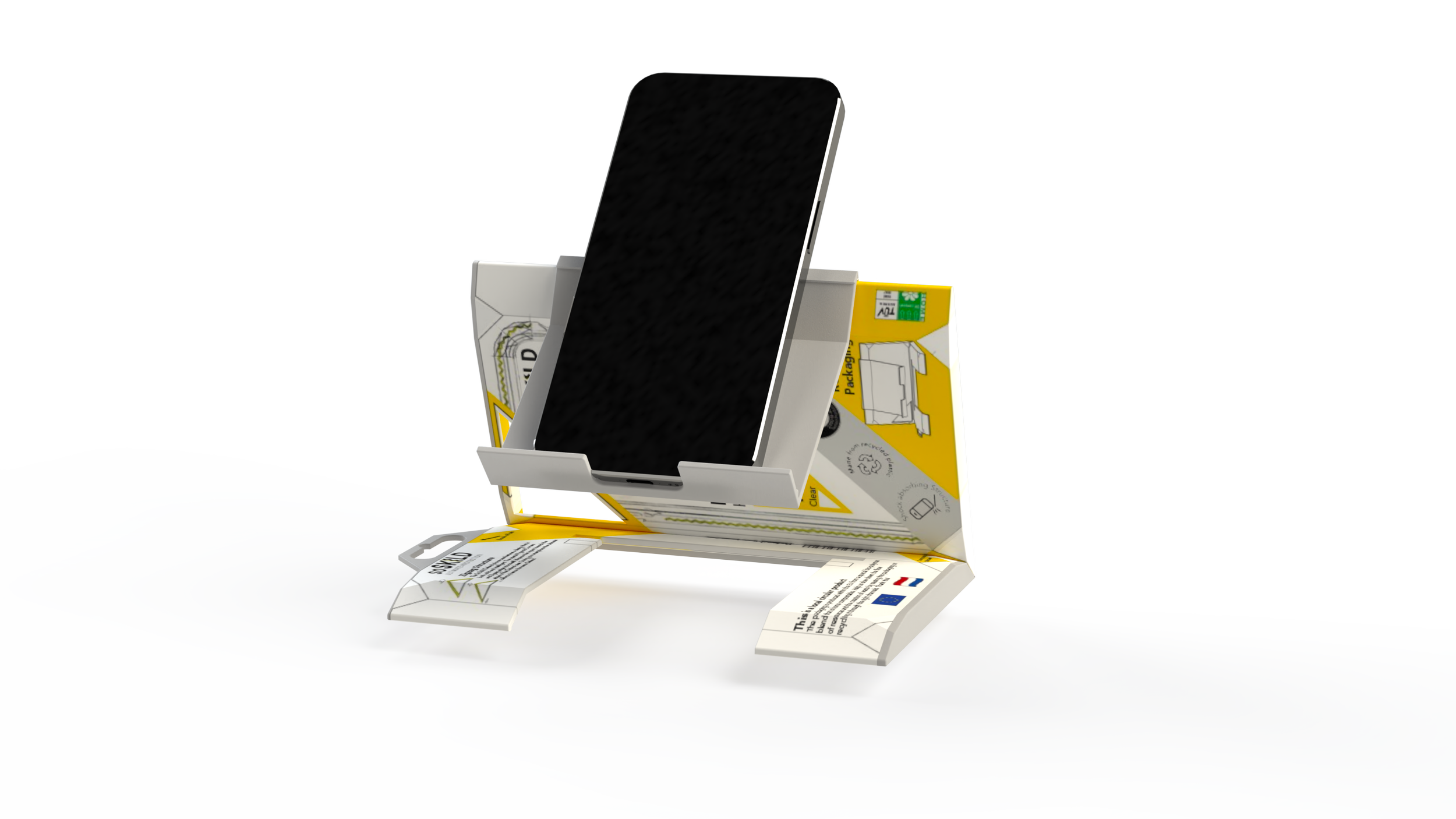
This is the final bachelor project (DP5) of the Industrial Design Engineering Bachelor. This project is the capstone to my bachelor’s degree to achieve a Cum Laude graduation with Honours. This project was executed as assignment for Mconomy for their brand SoSkild, a phone accessory brand. Mconomy challenged us to create the innovation of today with the story for tomorrow. My research and methods have led me to answer this challenge with future of packaging, by slowing the flow of resources and reducing waste towards true circularity.
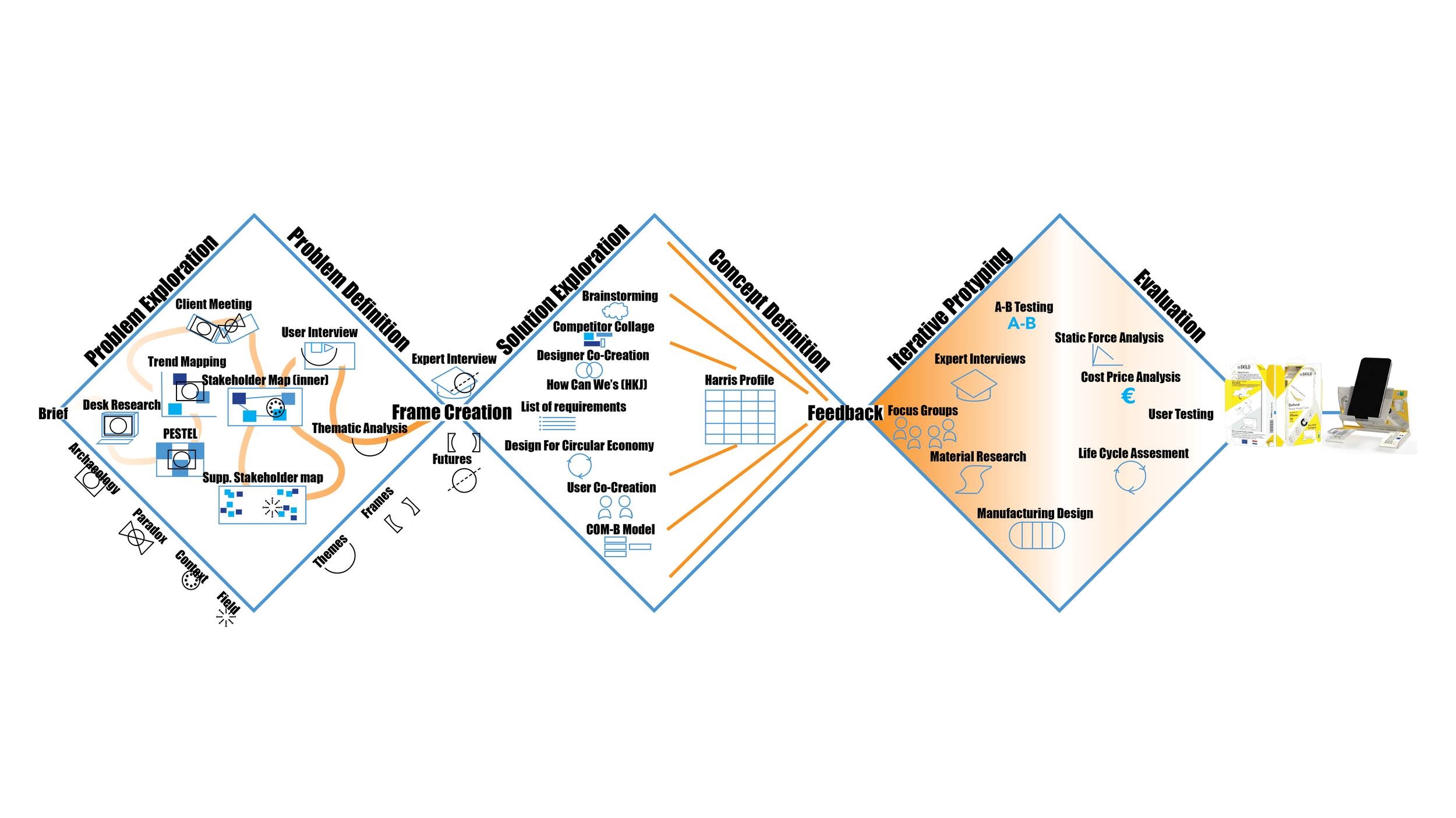
The general methodology of the project is presented here. A triple diamond structure of research, testing and execution.
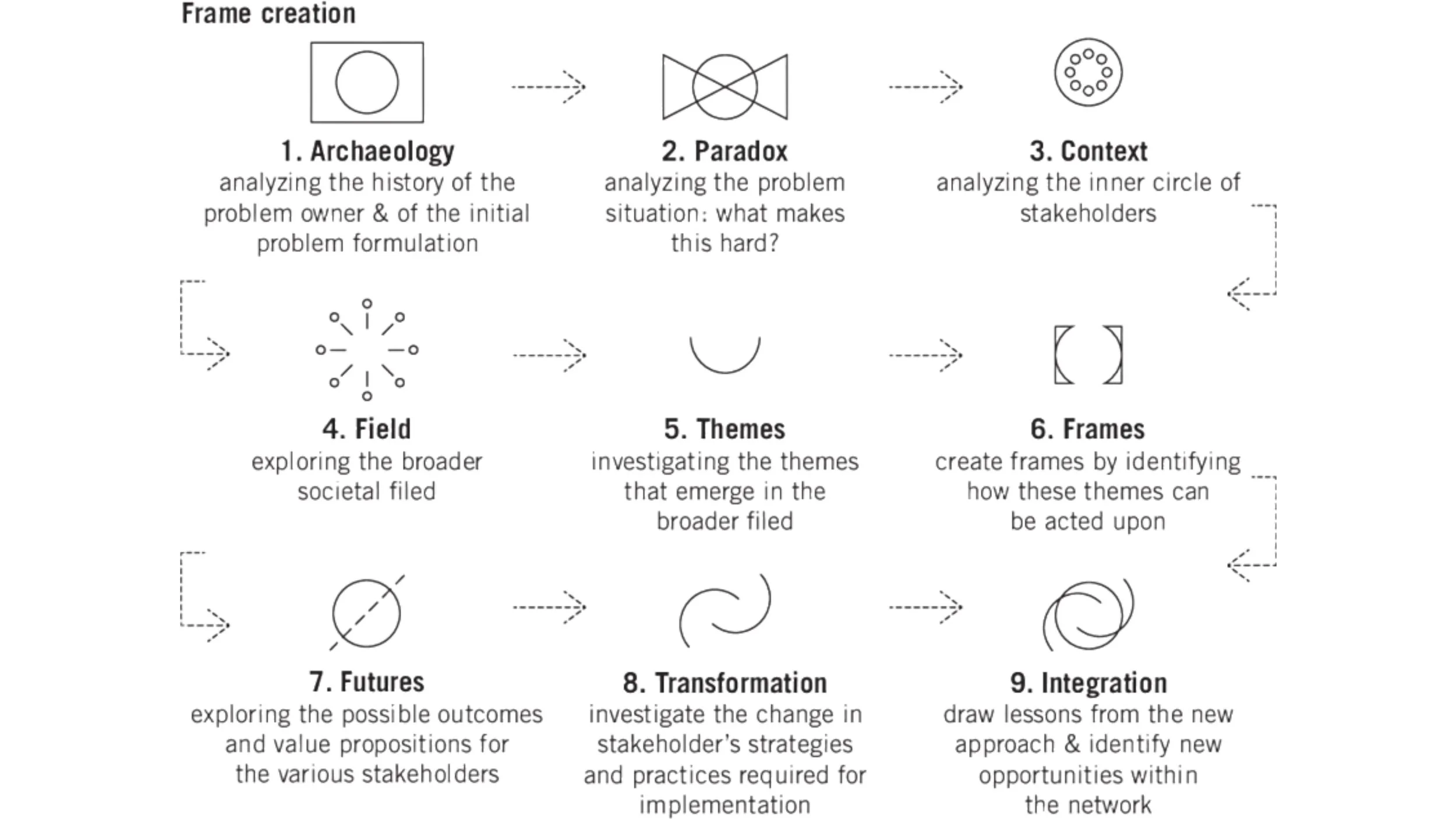
Using the Kees Dorst Method of frame creation, the problem statement was reframed and opportunities were identified.
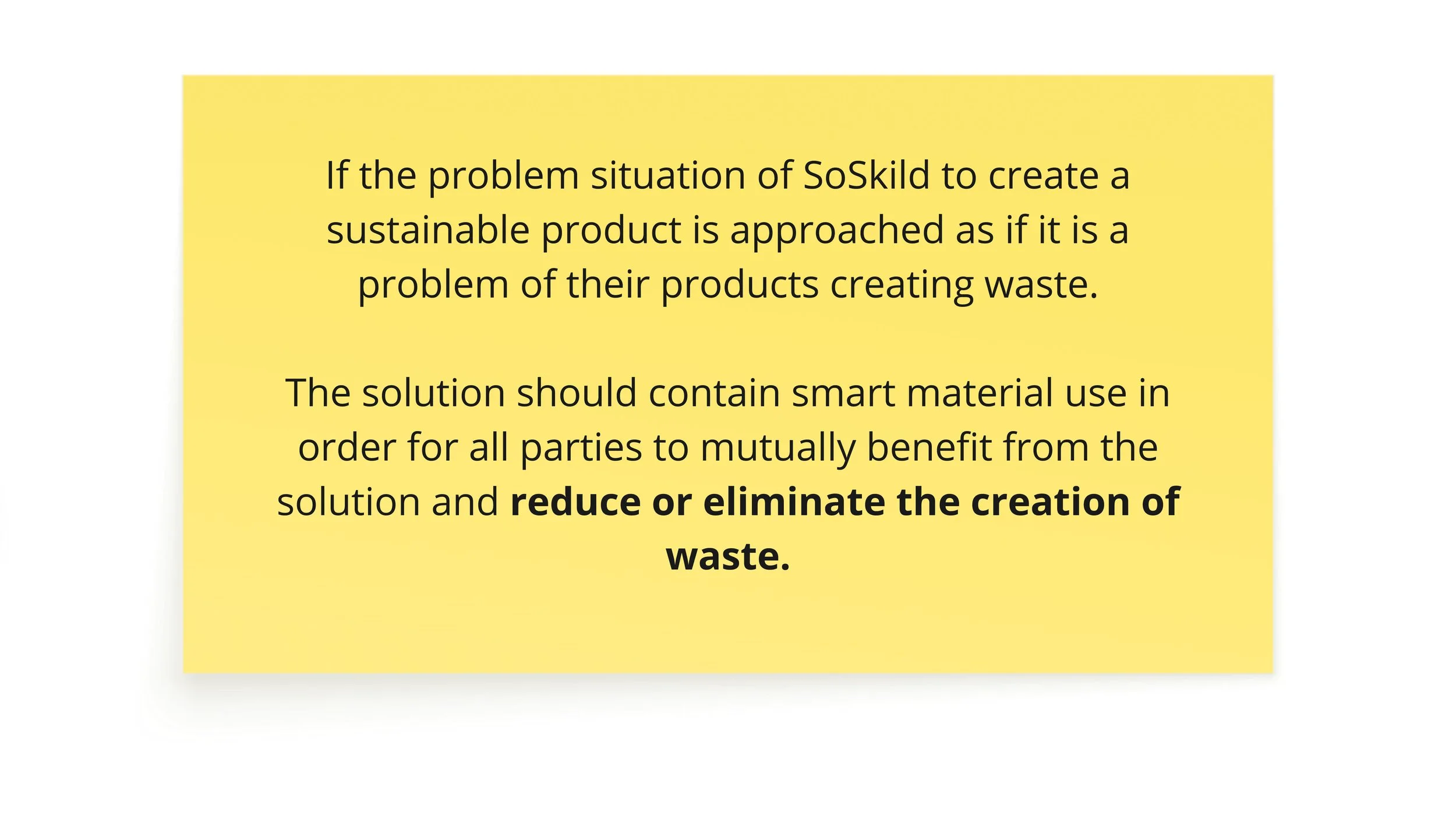
User Interviews, Expert Interviews, Stakeholder Mapping and Business analysis have resulted in a new solution frame. This solution direction is focused on using materials in a smart way to reduce or eliminate the creation of waste.
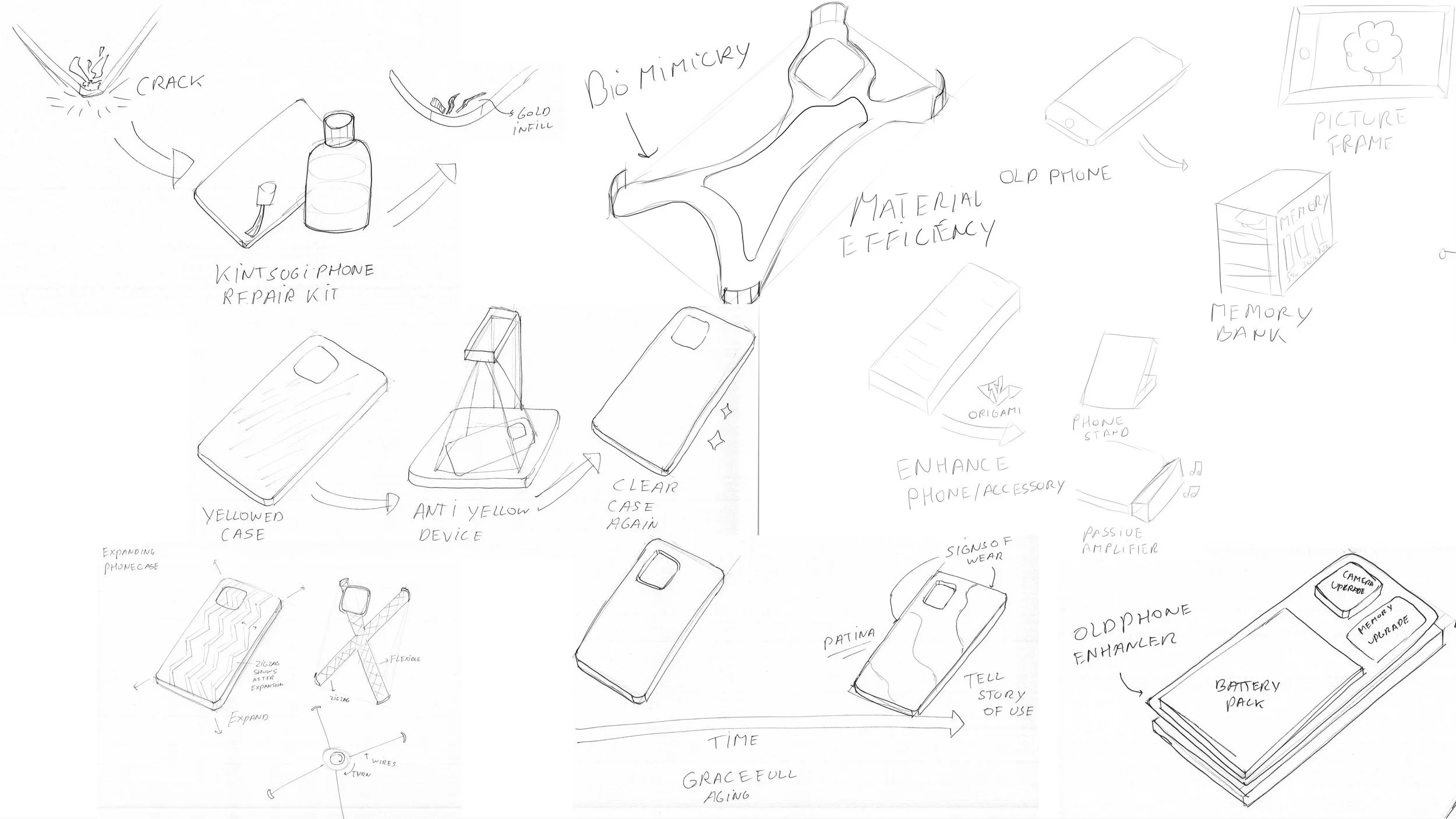
Using user personas and brainstorming several initial ideas were generated.
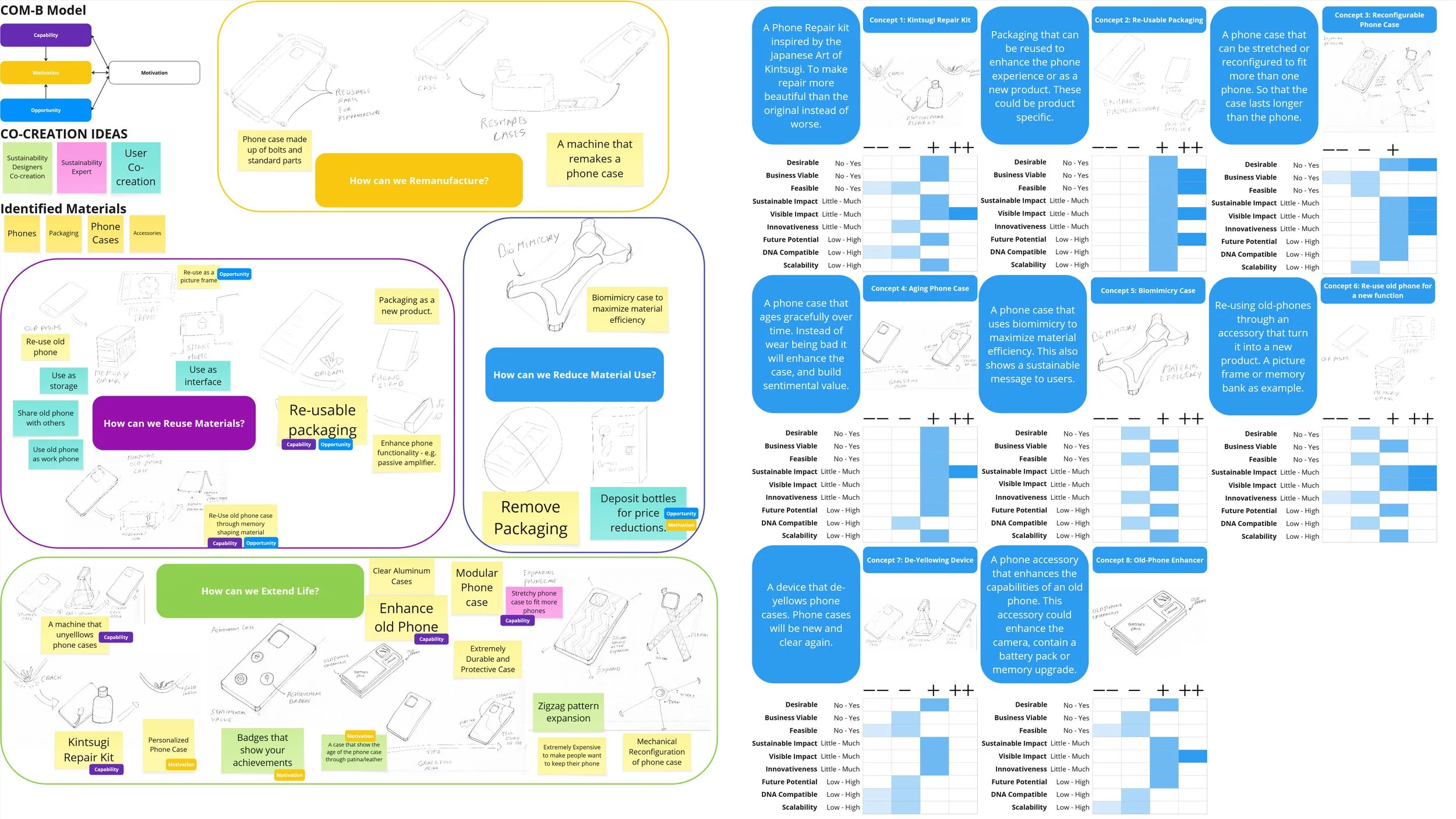
The ideas were further refined using the COM-B model and a Harris Profile was used in concert with a user survey to choose the best ideas.
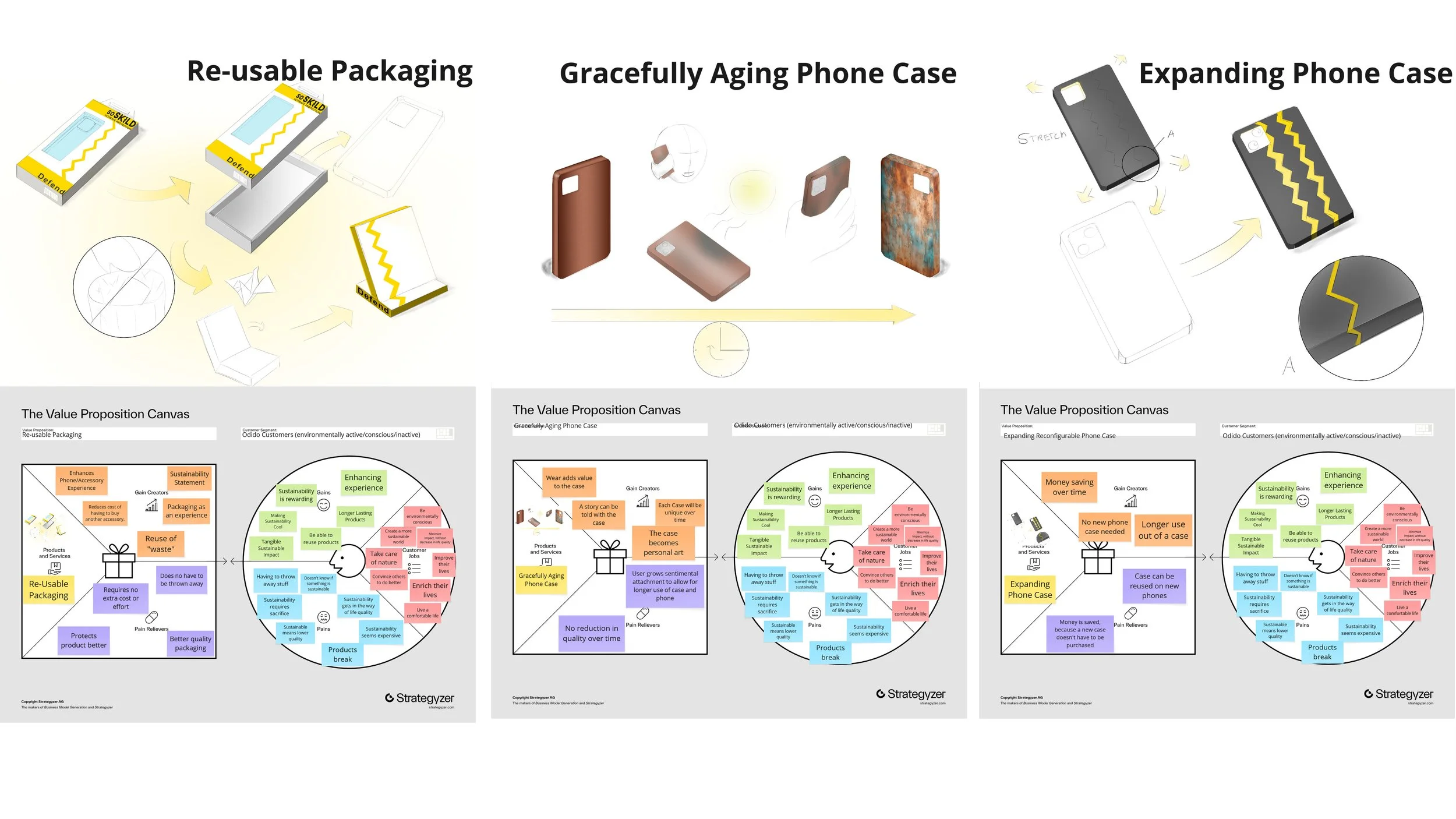
The three best ideas were further refined using the Value Proposition Canvas from Strategyzer.
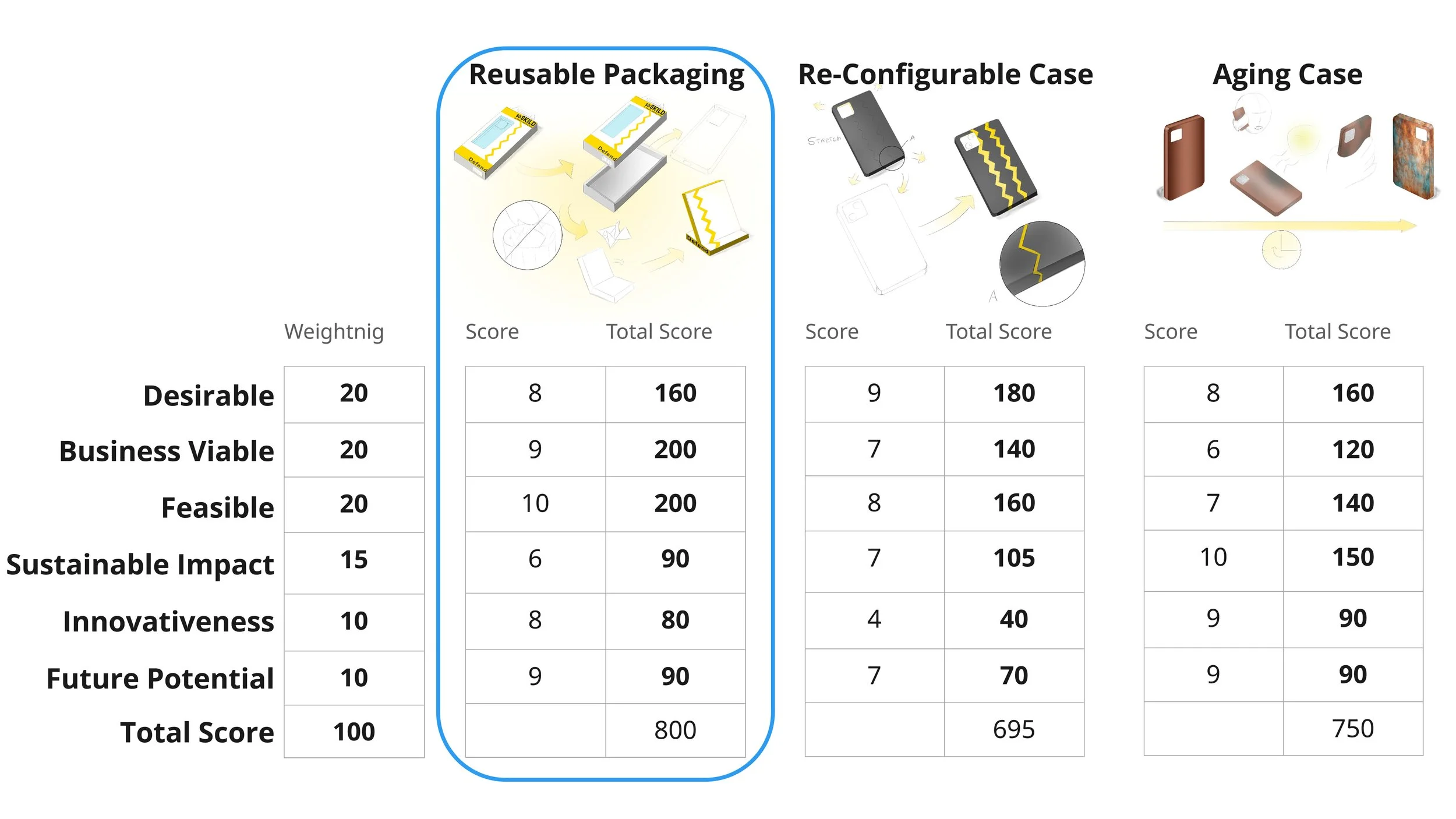
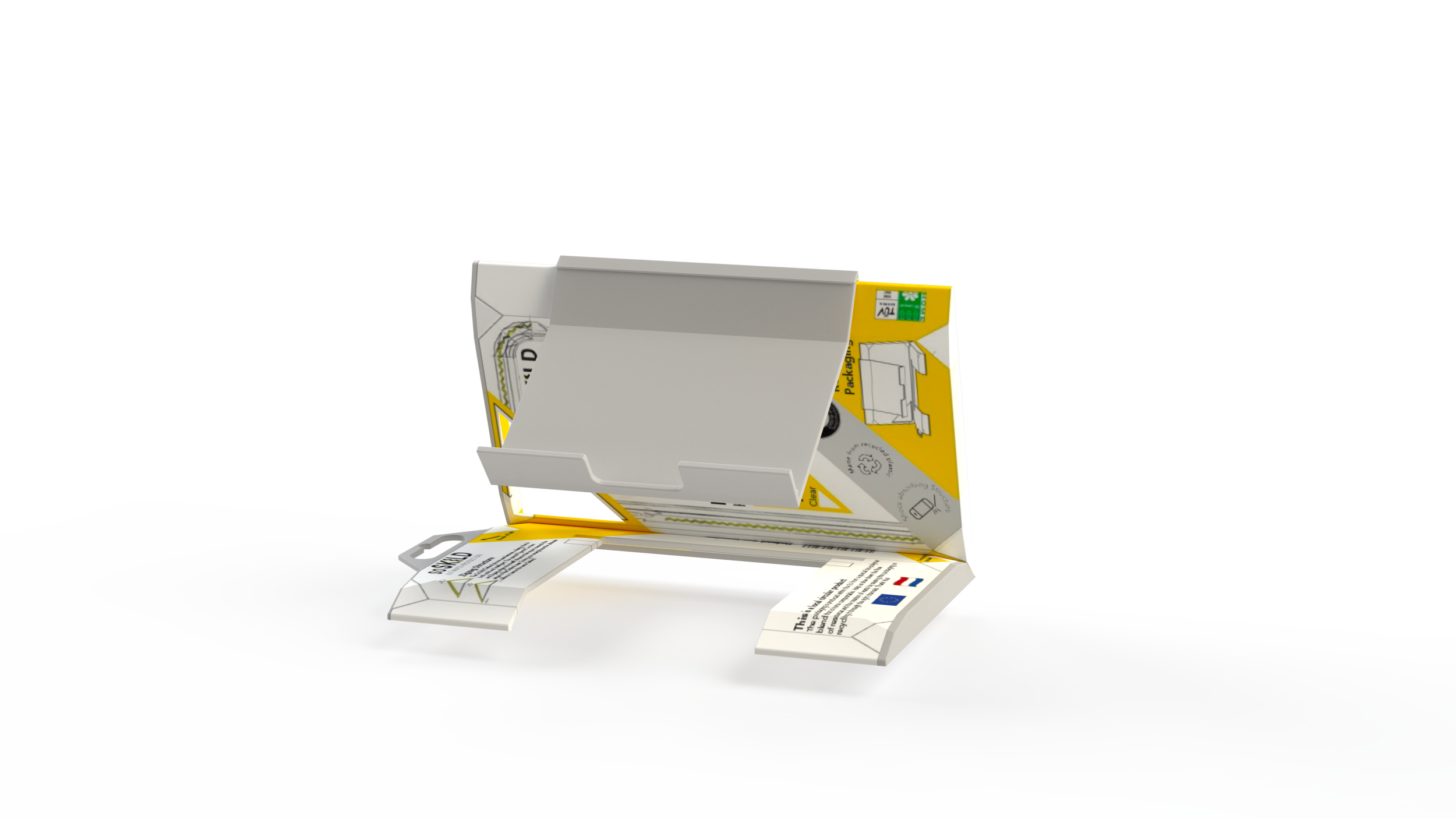
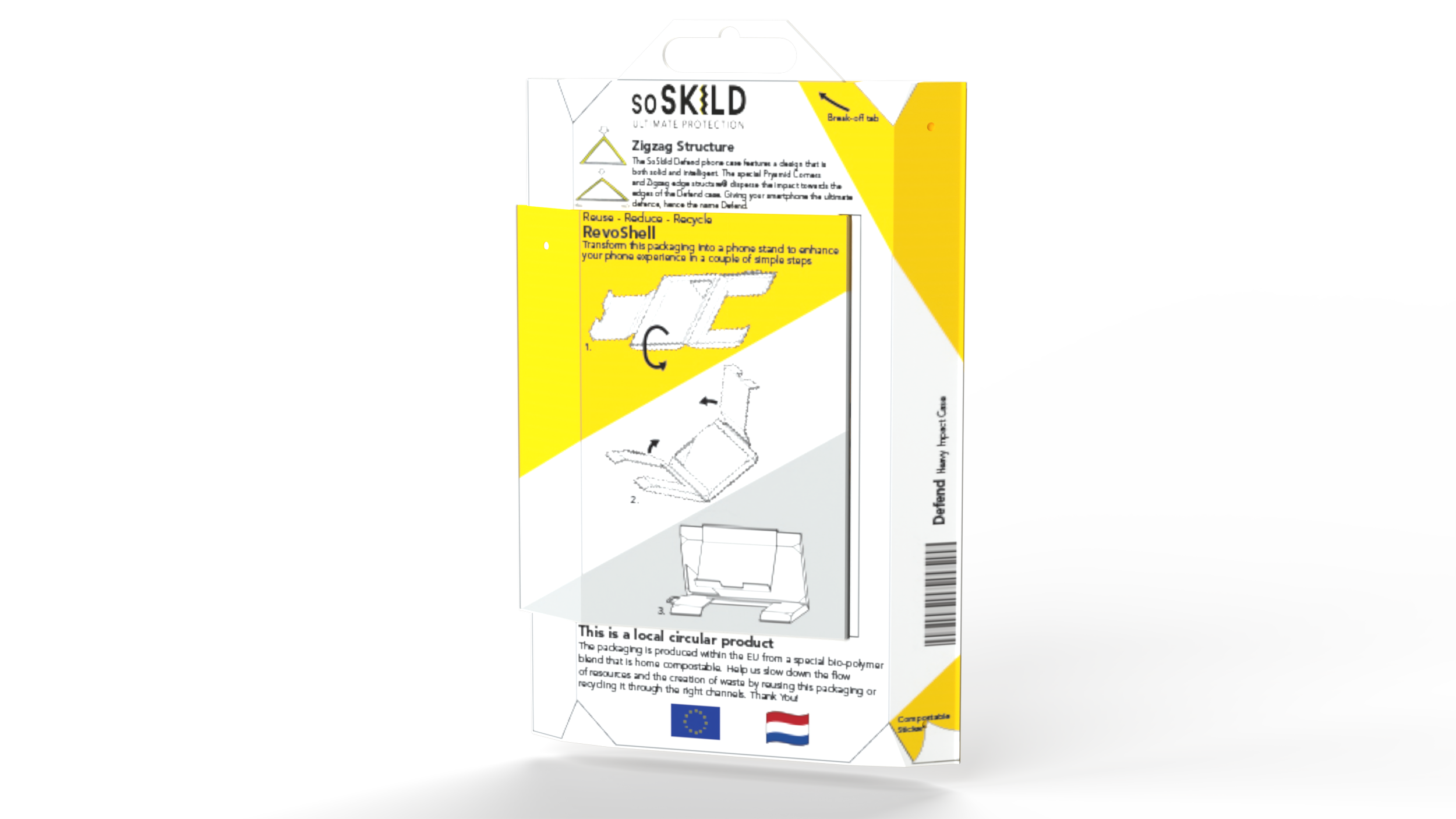
A second meeting with the client and further studies into desirability, viability, feasibility, sustainability, innovativeness and future potential have chosen the reusable packaging as a phone stand as the prime choice.
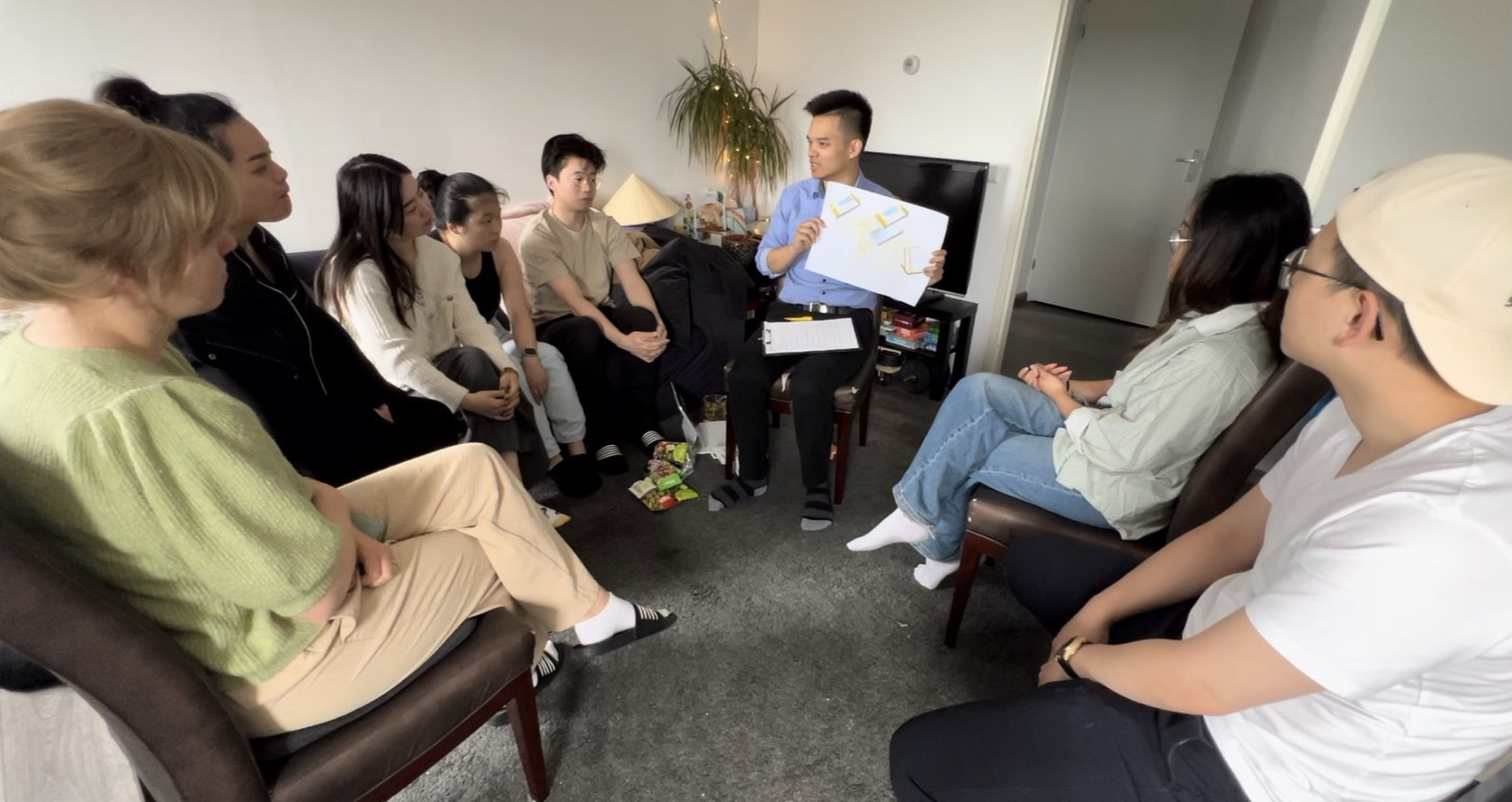
A co-creation session helped solidify requirements and desirables for reusable packaging.
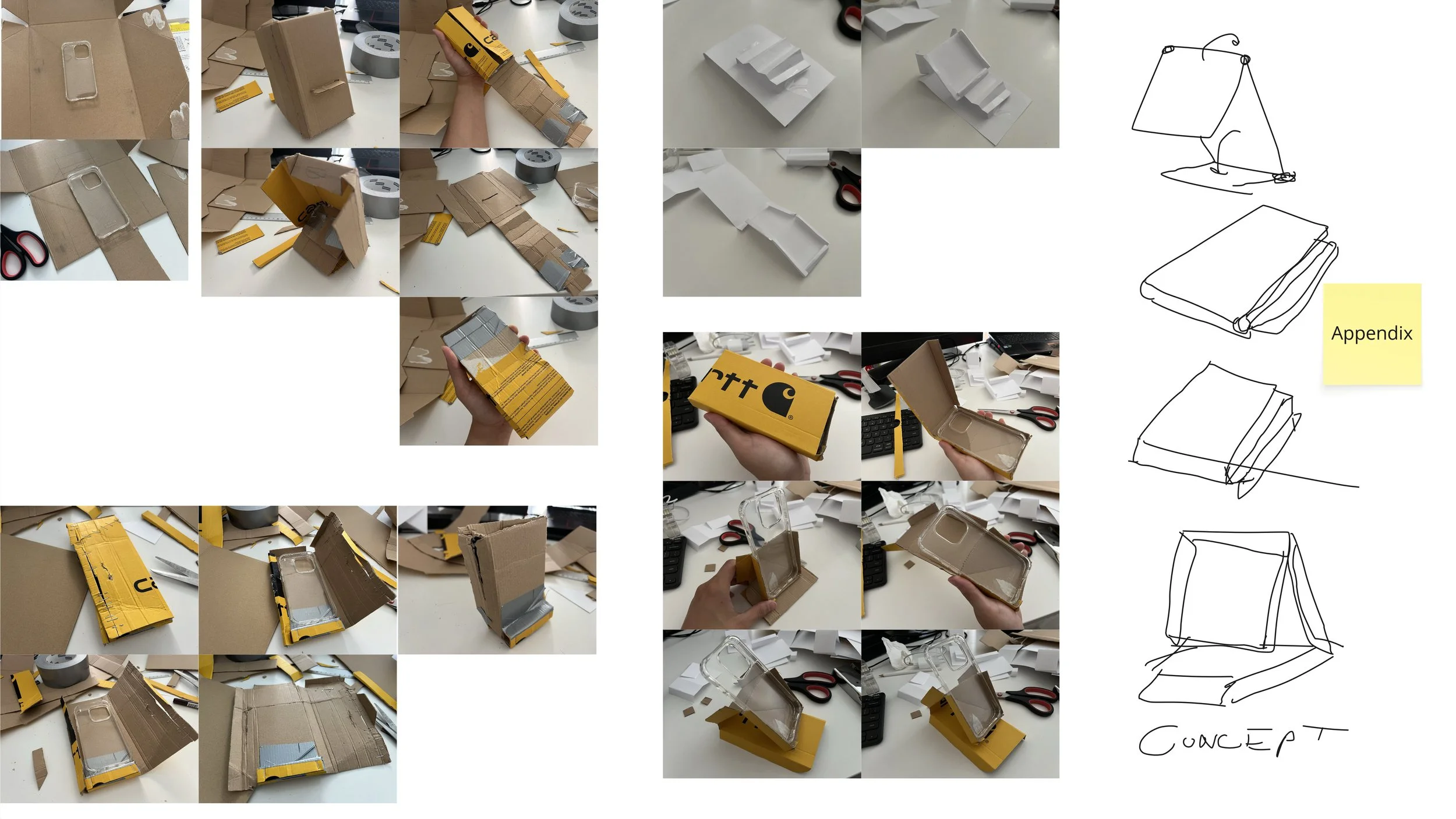
Driven by the requirements and the use of a morphological chart and a moodboard, prototypes were created to test out possible designs.
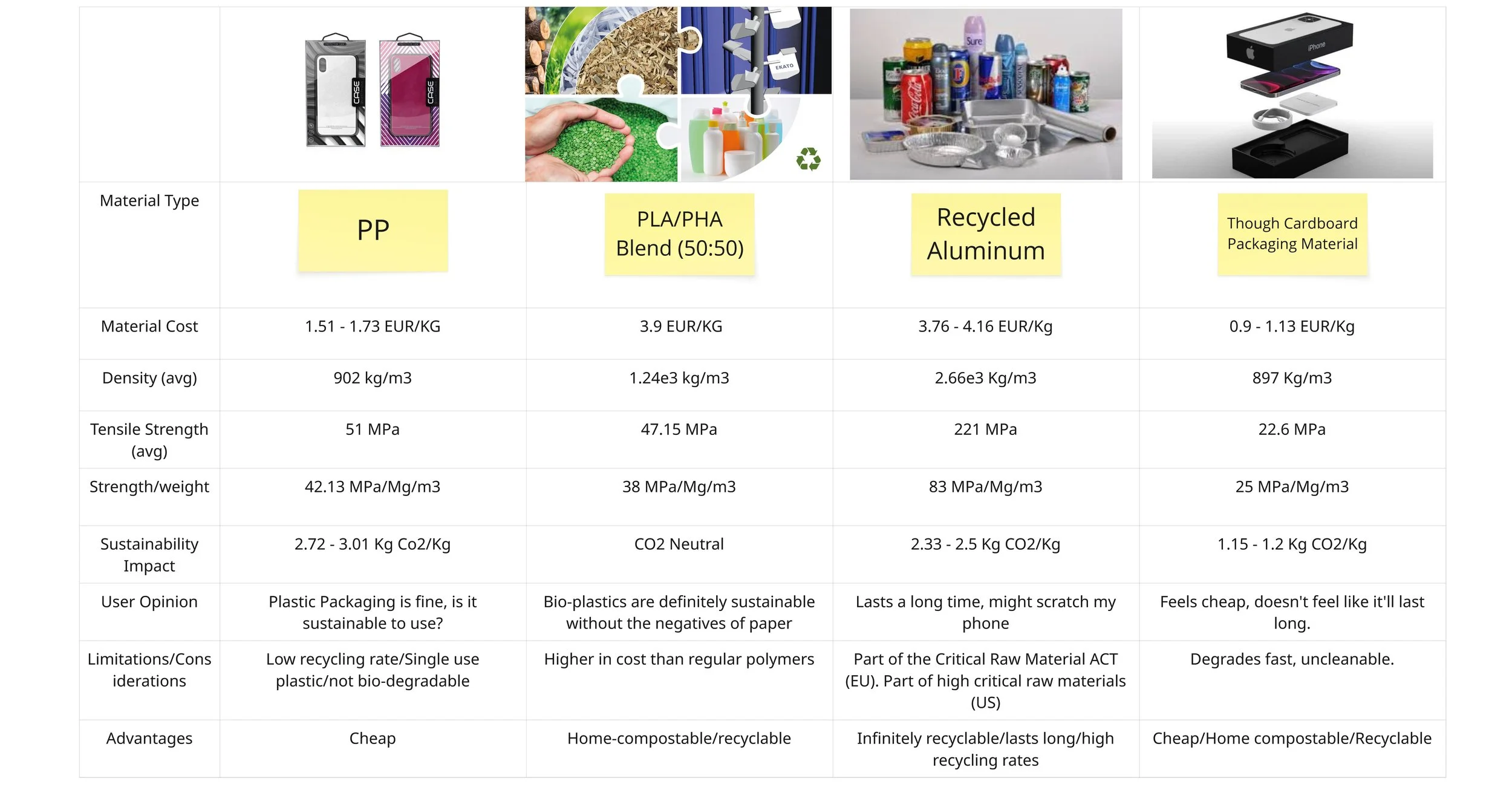
Using material research and an interview with a bio-polymer expert the best potential materials were selected in PP, PLA/BHA, Aluminum and Cardboard.
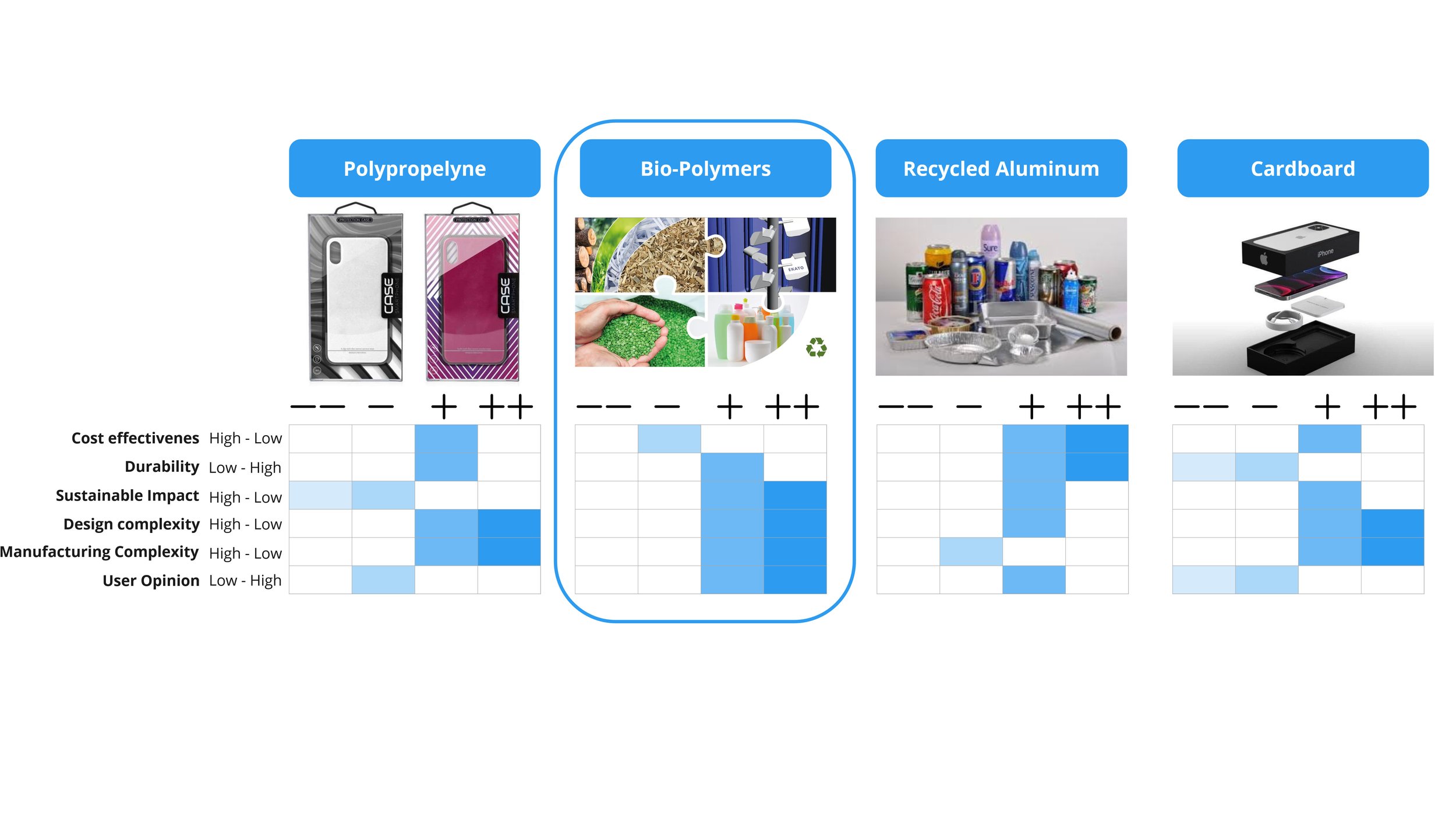
A Harris Profile was used to determine the PLA/BHA biopolymer as the best candidate.
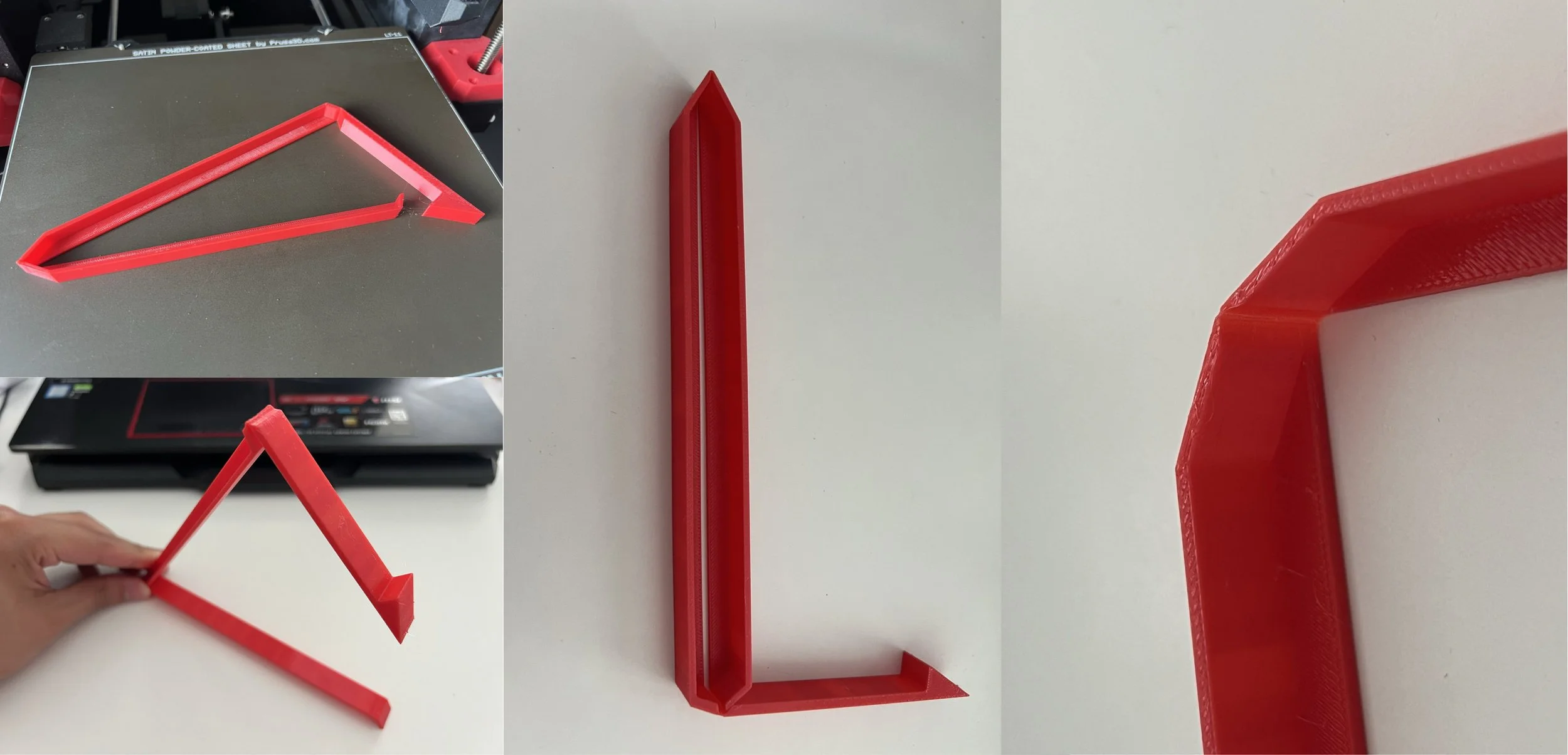
The working mechanism behind the reusable packaging was chosen to be a living hinge due to its simplicity and minimal part count.
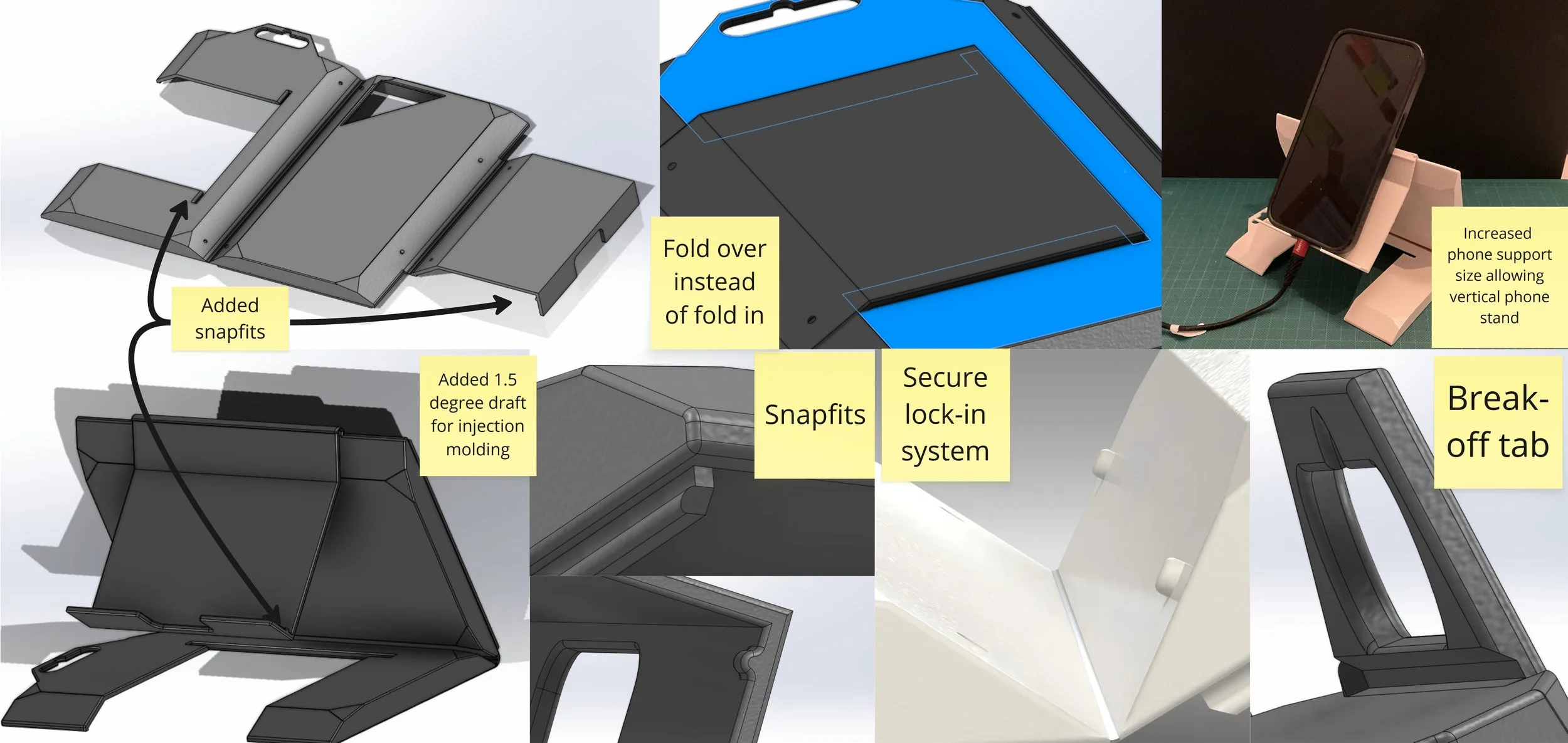
Multiple Iterations of design, prototyping and testing resulted in a complete design fit for manufacture using injection molding.
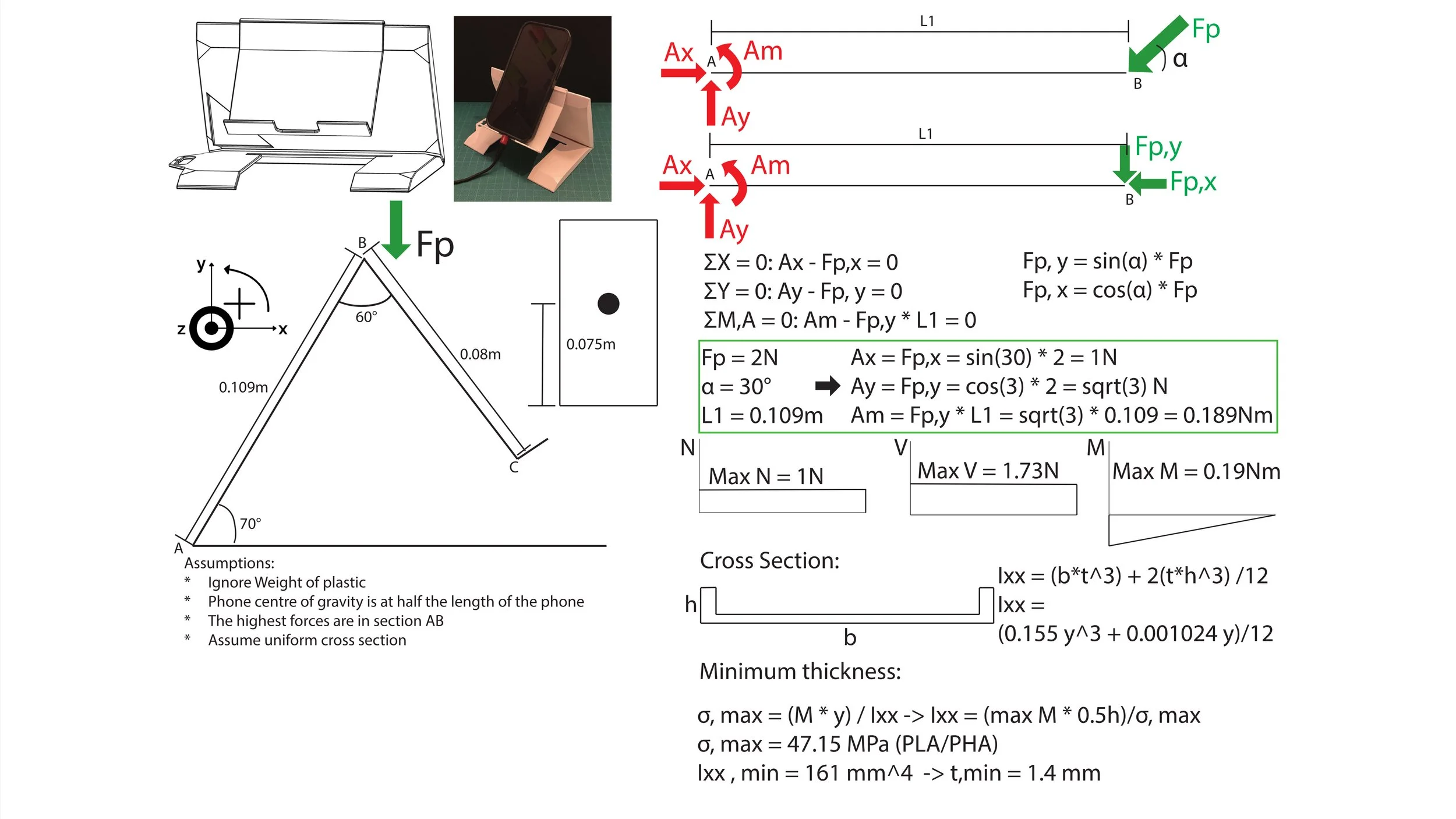
Static Force Analysis in combination with SolidWorks Finite Element Analysis was executed to determine a wall thickness of 1.4mm.
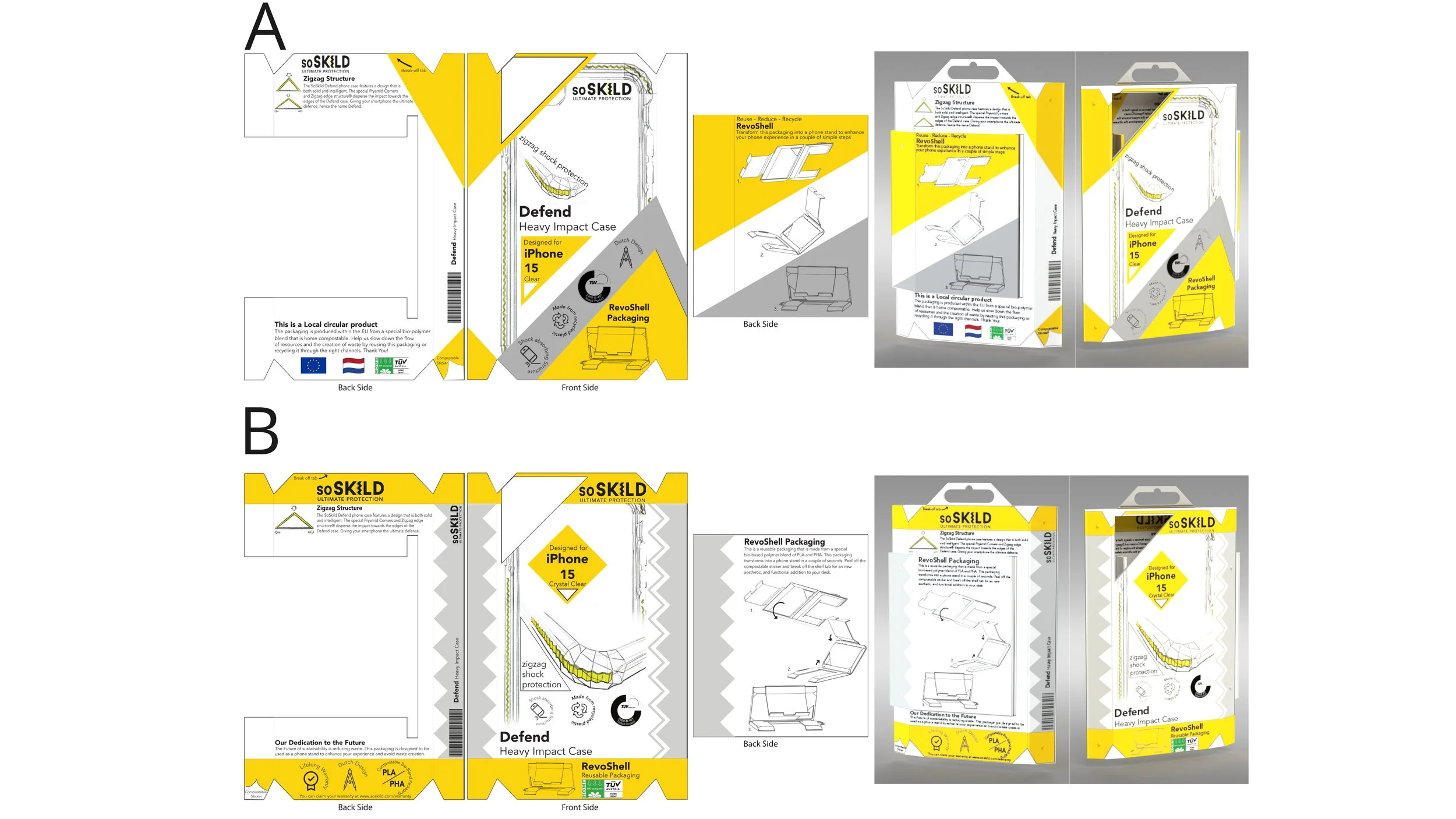
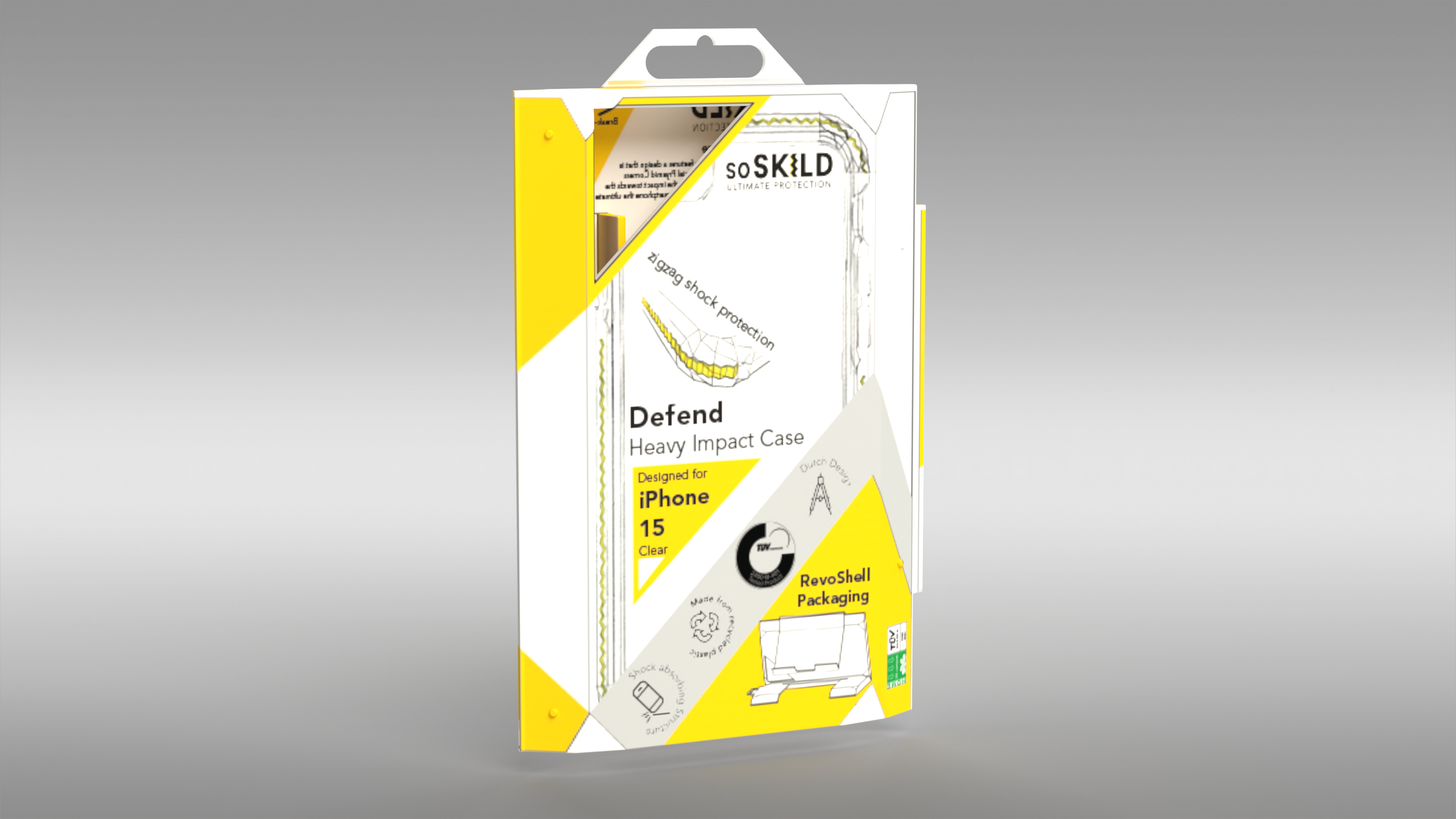
A branding A/B test was performed to determine user preference for esthetics and clarity.
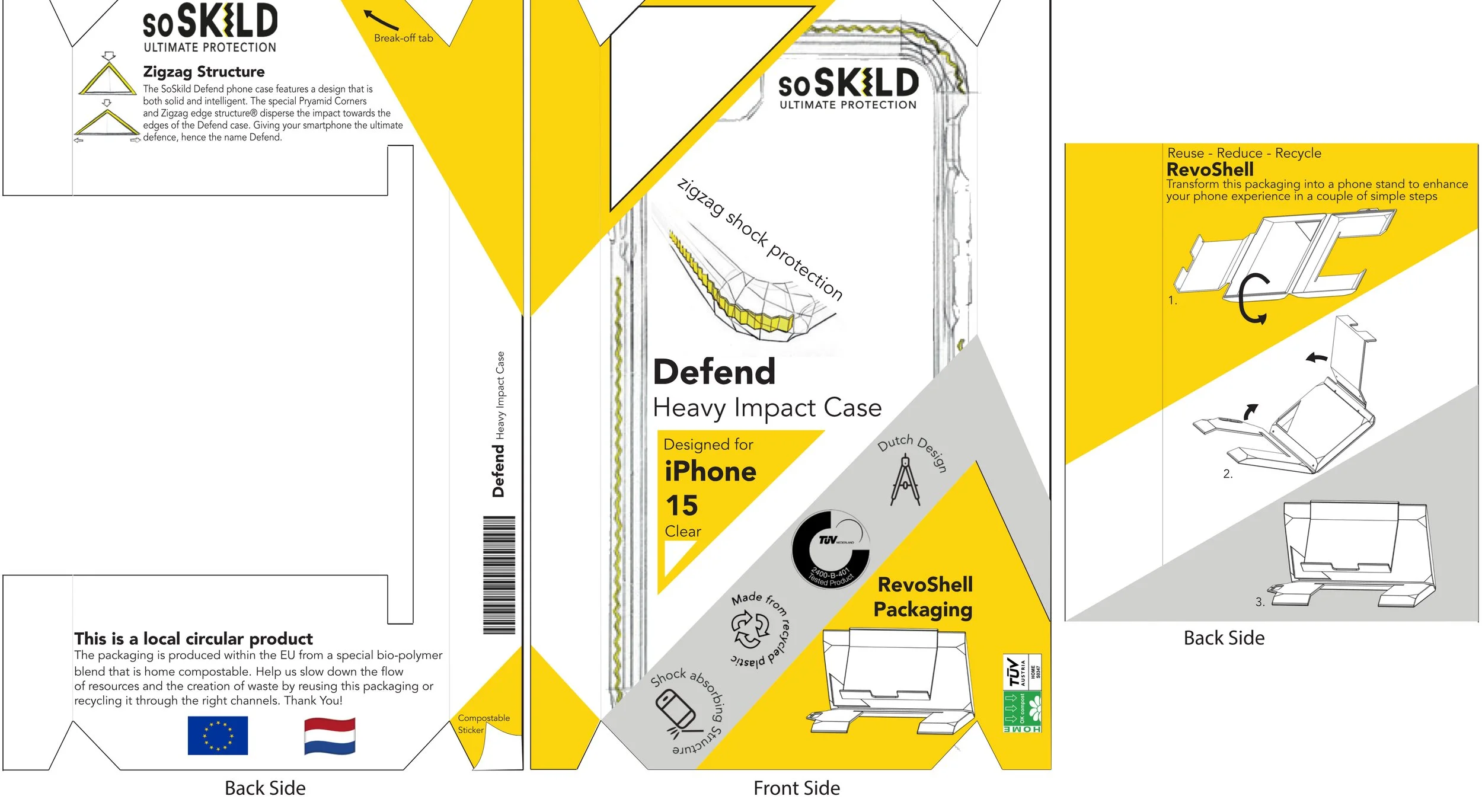
And as a result the final branding using feedback from the user test.
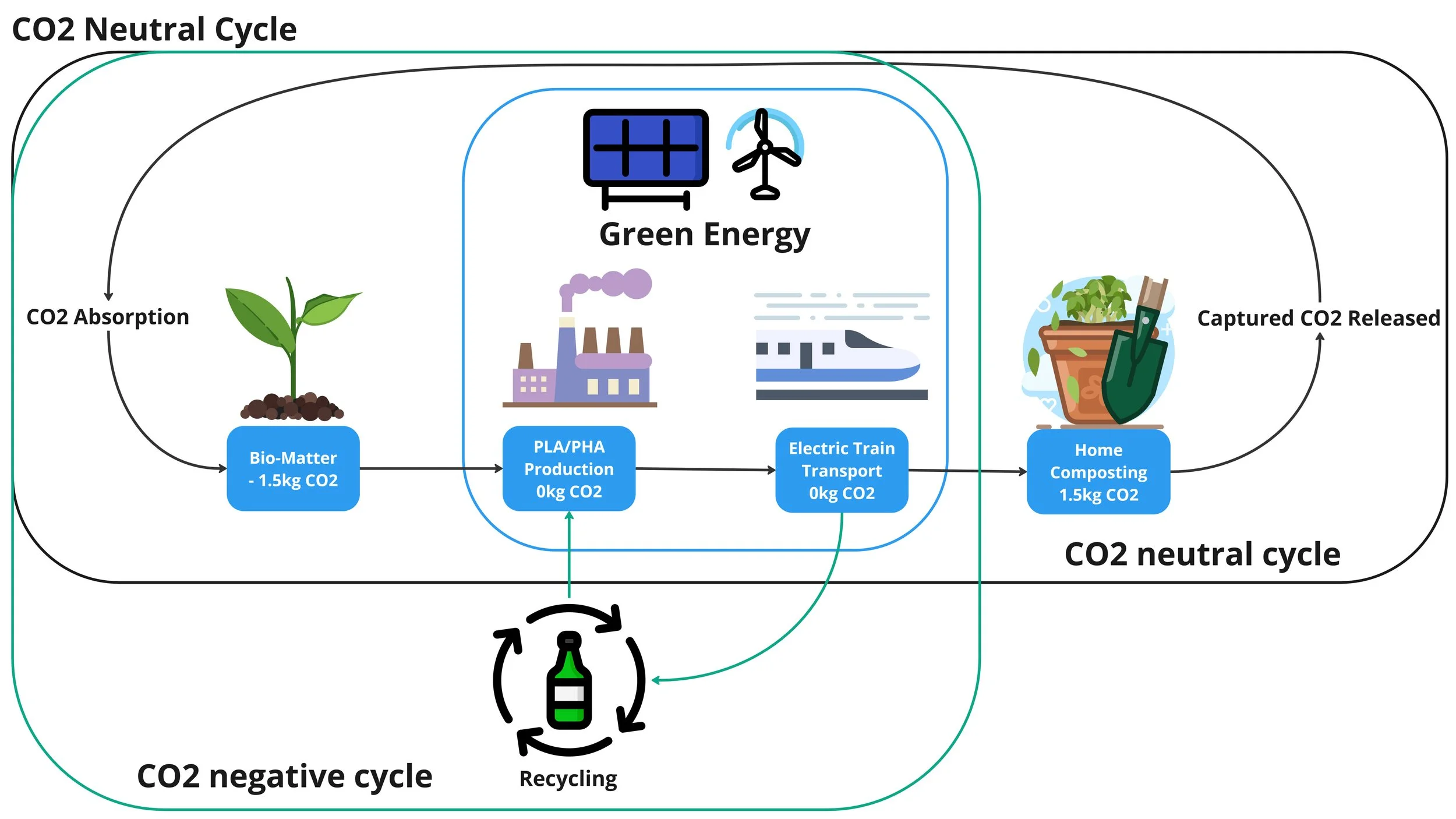
The sustainability impact as a CO2 neutral cycle was mapped using the biopolymer PLA/PHA.
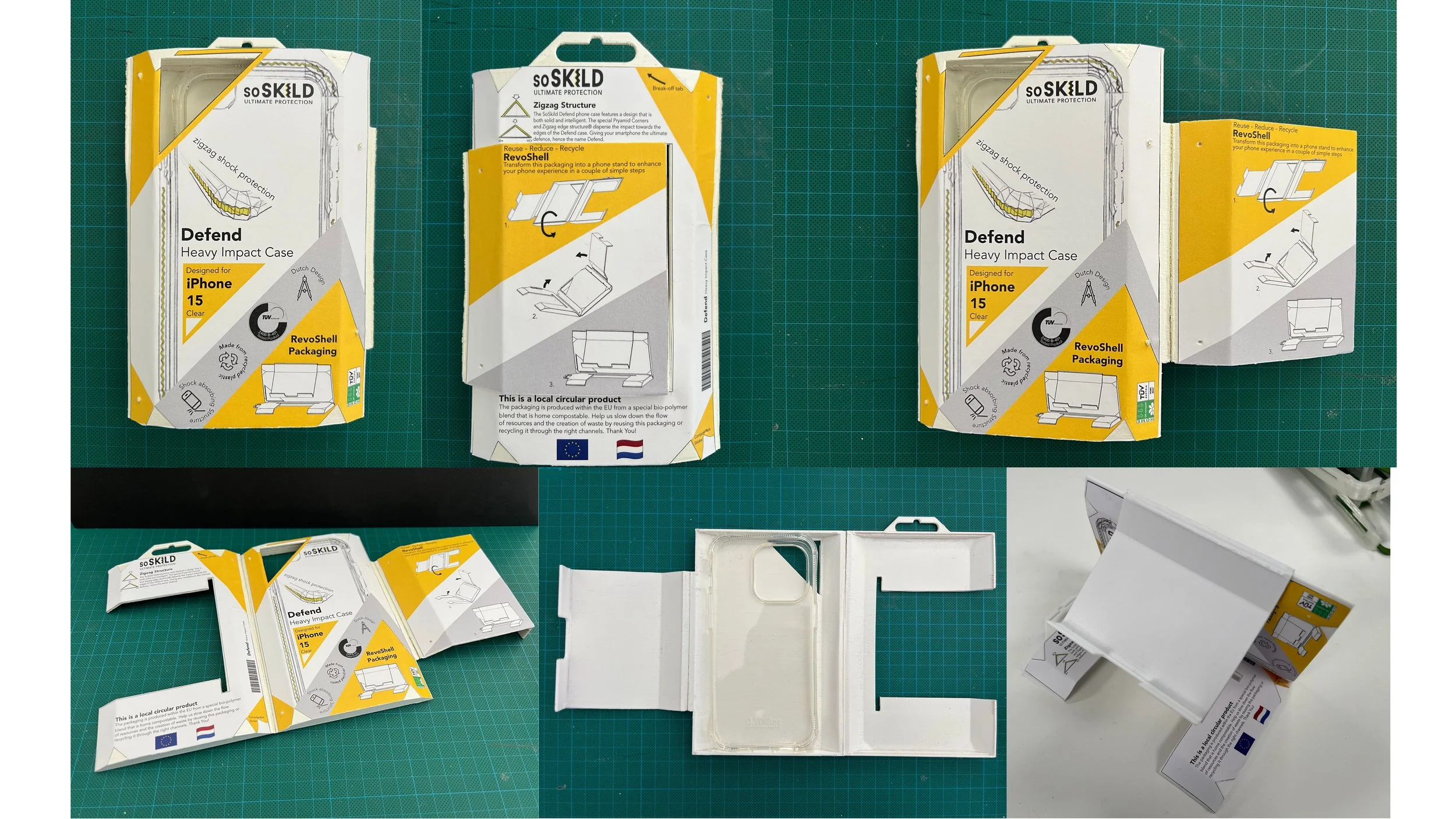
Finally the last prototype was created and a final user testing was executed.